
Launch an online business and you’ll ditch the commute, work in your pajamas, and sell to customers across the globe—no storefront lease required. But throwing up a website and hoping for sales? That’s not a strategy.
You need the right business model for your situation. Legal paperwork that protects you. A platform that won’t become a bottleneck. And a plan to actually get people to visit your store.
This guide covers everything—picking what to sell, setting up properly, building your site, and landing those crucial first customers.
Choosing Your Online Business Model
Skip the logo design and domain brainstorming for now. First question: what are you selling, and how does it reach customers?
Your business model determines how much cash you’ll need upfront, how many hours you’ll work weekly, and which skills matter most.
Most people fail not because they picked the wrong product, but because they never validated demand before investing thousands of dollars. Spend two weeks researching what people actually want to buy before you spend a dime on inventory.
Marcus Chen
Product-Based vs. Service-Based Businesses
Sell physical or digital products and you’re dealing with inventory, shipping logistics, returns, and quality control. The payoff? Automation potential. Once systems are running, you can scale revenue without clocking more hours.
Products need capital upfront. Inventory costs money. So does storage. And shipping supplies. And software to manage it all.
Service businesses run on your expertise. Consulting. Design. Coaching. Content writing. Startup costs drop dramatically—often under $500. No inventory nightmares. But there’s a ceiling. You only have so many hours to sell unless you hire a team or package your services into fixed-scope offerings.
Many successful founders blend both. A graphic designer sells custom client work and pre-made Canva templates. A fitness trainer offers personalized coaching plus a $29/month workout app subscription.

Dropshipping, Print-on-Demand, and Digital Products
Dropshipping lets you list products on your site while suppliers handle storage and shipping. You never touch a box. Startup costs stay under $500 in most cases, but profit margins suffer (typically 10-20% after supplier cuts). You’re also trusting strangers with your reputation—slow shipping and quality issues become your problem.
Print-on-demand works for custom designs on t-shirts, mugs, phone cases, wall art. Upload your designs, and fulfillment partners print each order individually. Margins hover around 20-30%, but you can test 50 designs without buying inventory. Zero risk if a design flops.
Digital products deliver the fattest margins—often 80-95%—since there’s no per-unit cost after initial creation. Ebooks, online courses, Notion templates, Lightroom presets, stock photography. The catch? You need knowledge worth packaging, and you’re competing in saturated niches. Standing out requires serious differentiation.
Wholesale/private label means bulk-buying inventory at wholesale prices and reselling at retail. Margins improve to 40-60%, and you control quality and shipping speed. But you’re risking $2,000-$10,000 upfront. If products don’t sell, you’re stuck with boxes in your garage. Private labeling goes further—you brand generic manufacturers’ products as your own unique line.
| Business Model | Startup Cost | Profit Margin | Complexity | Scalability |
|---|---|---|---|---|
| Dropshipping | $100-$500 | 10-20% | Low | High |
| Print-on-Demand | $100-$300 | 20-30% | Low | High |
| Wholesale/Inventory | $2,000-$10,000+ | 40-60% | Medium | High |
| Digital Products | $0-$1,000 | 80-95% | Medium | Very High |
| Service-Based | $0-$500 | 60-80% | Low | Low-Medium |
Got $200 and only weekends free? Try dropshipping or print-on-demand. Have $5,000 saved and 40 hours weekly to commit? Buy inventory for better margins.
Legal and Financial Setup Requirements
Skip the legal setup and you’re risking personal assets when things go wrong. Plus, tax time becomes a nightmare.
Handle these fundamentals before processing your first order.
Business registration: Operating as a sole proprietor requires zero paperwork in most states, but lawsuits can drain your personal bank account. An LLC costs $50-$500 depending on your state and creates a legal shield between business debts and your personal assets. File through your state’s Secretary of State website—the process takes 15 minutes online.
EIN (Employer Identification Number): Think of this as a Social Security number for your business. The IRS provides them free. Banks require an EIN for business accounts, and you’ll need one if you ever hire help. The online application at irs.gov takes about 10 minutes—you’ll get the number immediately.
Business bank account: Mixing personal and business transactions creates tax headaches. Open a separate business checking account. Most banks offer free checking for small businesses. Bring your EIN and formation documents (or DBA certificate for sole proprietors).
Licenses and permits: Requirements vary wildly by location and product type. Check your state’s small business portal and county clerk’s office. General merchandise typically needs just a basic business license ($50-$200 yearly). Selling food, cosmetics, or supplements triggers FDA regulations and additional permits.
Sales tax: Collect sales tax wherever you have “nexus”—physical presence or significant sales volume. Most ecommerce platforms handle collection automatically, but you’re responsible for registering with each state’s revenue department and sending payments quarterly. Multi-state businesses rely on TaxJar or Avalara to manage the complexity.
Insurance: General liability insurance runs $300-$1,000 annually and covers customer injury claims. Manufacturing products? Add product liability coverage. Many suppliers won’t work with you without proof of insurance.
Your week-one checklist: Register business entity → Apply for EIN → Open business bank account → Get required licenses → Configure sales tax collection. Knock these out fast so you can focus on revenue.
Building Your Online Store or Platform
Choose the wrong platform and you’ll waste months rebuilding later. Or you’ll hit growth limits and face an expensive migration.
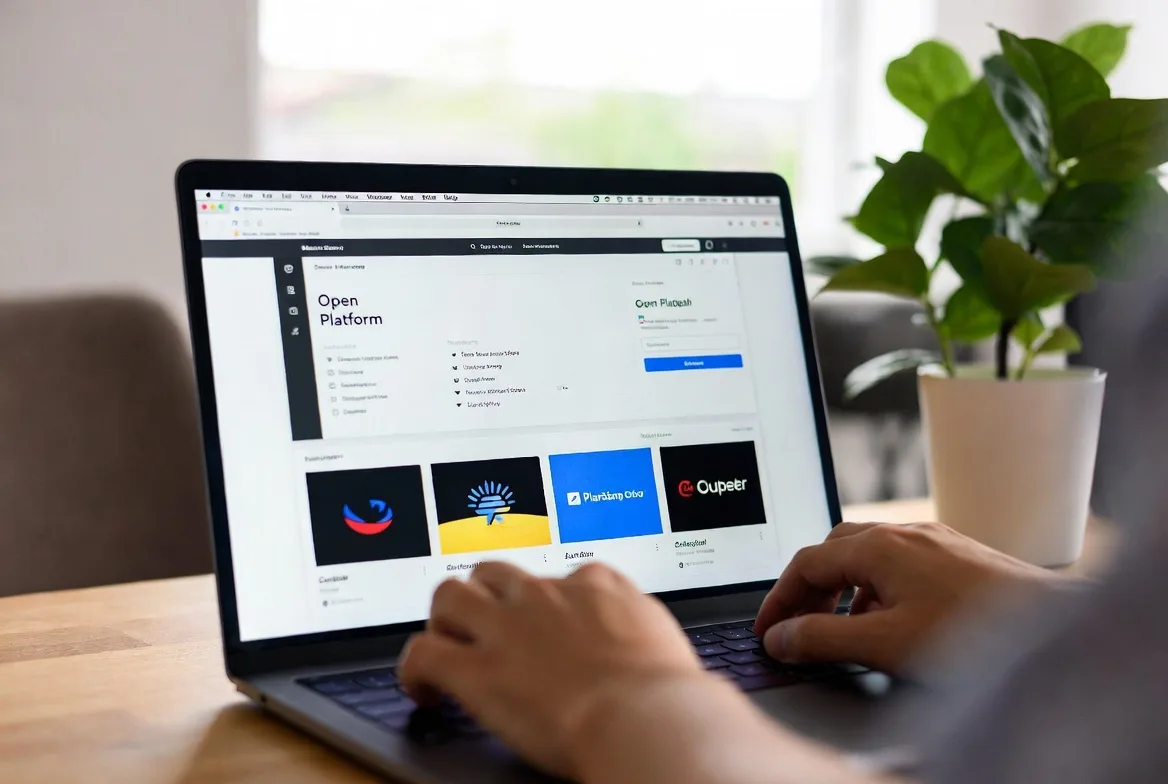
Selecting an Ecommerce Platform
Shopify dominates because beginners can launch without touching code. Hosting, security, updates—all handled automatically. Thousands of apps extend functionality when you need features. Basic plan costs $39/month plus 2.9% + 30¢ per transaction. Best choice for product-focused businesses wanting speed over customization.
WooCommerce is free WordPress plugin, but you’ll pay for hosting ($10-$50/month), domain registration, SSL certificate, and premium plugins for essential features. Real monthly cost: $30-$100+. Way more customizable than Shopify if you’re comfortable with WordPress. Great for businesses wanting complete control or already running WordPress sites.
BigCommerce ($39-$399/month) includes robust features out of the box with zero transaction fees, making it cheaper at high volumes. Learning curve steeper than Shopify. Strong option for stores managing hundreds of SKUs planning serious growth.
Wix and Squarespace work for simple stores under 50 products. Beautiful templates, intuitive drag-and-drop editing, but limited ecommerce capabilities and scaling challenges. Best for service providers adding a small product shop.
| Platform | Monthly Cost | Ease of Use | Best For | Transaction Fees |
|---|---|---|---|---|
| Shopify | $39-$399 | Very Easy | Product businesses needing fast launch | 2.9% + 30¢ (waived with Shopify Payments) |
| WooCommerce | $30-$100+ | Medium | WordPress users wanting full control | Varies by payment processor |
| BigCommerce | $39-$399 | Medium | High-volume stores | 0% (built-in) |
| Wix | $27-$159 | Very Easy | Small catalogs under 50 products | 2.9% + 30¢ |
Most beginners succeed fastest with Shopify. Migration tools exist if your needs evolve later.
Domain Name and Hosting Essentials
Your domain should be short, memorable, and ideally hint at your niche. Check availability at Namecheap or Google Domains ($10-$15 yearly). Avoid hyphens, numbers, and weird extensions—.com remains king for trust and memorability.
Shopify and similar hosted platforms include hosting in monthly fees. WooCommerce users need managed WordPress hosting like SiteGround, Bluehost, or WP Engine. Don’t skimp on cheap shared hosting—slow load times kill conversions.
SSL certificates (the padlock icon in address bars) are non-negotiable for ecommerce. Most platforms and hosts include them free. Without SSL, browsers display scary “Not Secure” warnings that obliterate trust.
Set up professional email with your domain (you@yourbusiness.com) through Google Workspace ($6/user/month) or Zoho Mail (free tier available). Sending business emails from @gmail.com looks amateur and hurts credibility.
Sourcing Products and Setting Pricing
World-class marketing can’t fix terrible products or pricing that guarantees losses.
Finding suppliers: Alibaba and AliExpress connect you with manufacturers, mostly overseas. Always order samples before bulk purchases—quality varies dramatically between suppliers. Domestic options like Faire or Wholesale Central cost more per unit but deliver faster and communicate easier.
For dropshipping, use vetted directories like Spocket, SaleHoo, or Modalyst rather than random AliExpress sellers. Check reviews obsessively. Place test orders yourself to experience shipping times firsthand.
Inventory management: Start lean. Order enough inventory for 30-60 days of projected sales, not six months. Use built-in inventory tracking from your ecommerce platform or dedicated tools like Stocky (for Shopify) or TradeGecko. Configure low-stock alerts so bestsellers never go out of stock during peak demand.
Pricing strategy: Use this baseline formula: (Product cost + shipping + packaging + overhead) × 2.5 = retail price. This covers costs, marketing spend, returns, and profit margin. A product costing you $10 all-in should retail for $25 minimum.
Research competitor pricing, but don’t compete purely on price. Racing to the bottom attracts bargain hunters who’ll abandon you for a $1 cheaper option elsewhere. Differentiate through superior product photography, faster shipping, exceptional customer service, or smart product bundling.
Build in payment processing fees (roughly 3%), returns (5-10% of revenue for most categories), and advertising costs (10-30% of revenue initially). If these expenses consume your entire margin, you’ve chosen the wrong product or priced too aggressively low.
Test pricing in the real world. Launch at your calculated price, then experiment with limited-time promotions to gauge customer price sensitivity. Sometimes a 15% discount triples unit sales, increasing total profit despite lower per-unit margins.

Marketing Your New Online Business
Building the store is straightforward. Getting strangers to visit and buy requires intentional marketing.
Pre-Launch Strategies
Don’t wait for launch day to start marketing. Build anticipation 2-4 weeks beforehand.
Create a “coming soon” landing page with email capture offering early-bird discounts. Drive initial traffic through personal social networks, relevant subreddits and Facebook groups (where rules allow), and outreach to micro-influencers in your niche.
Build content assets before launch: blog posts answering common customer questions, social media posts showcasing products, and email sequences ready to nurture subscribers. Pre-write 10-15 social posts and 3-5 blog articles so launch week doesn’t overwhelm you.
Contact 10-20 people matching your target customer profile. Offer free products in exchange for honest reviews and unboxing content. User-generated content builds trust faster than any advertisement you could buy.
Organic and Paid Traffic Methods
SEO basics: Research keywords using free tools like Google Keyword Planner or Ubersuggest. Write detailed product descriptions (300+ words minimum) naturally incorporating relevant keywords. Create blog content targeting informational searches adjacent to your products—think “how to choose running shoes” if you sell athletic footwear.
Optimize images with descriptive file names and alt text. Build backlinks through guest posting on industry blogs, securing features in gift guides, and creating shareable resources like detailed size charts or comparison guides others want to reference.
Social media: Choose one or two platforms where your specific customers spend time. Visual products (fashion, home goods, food) thrive on Instagram and Pinterest. B2B or professional services get better traction on LinkedIn.
Post consistently—4-7 times weekly minimum—mixing product showcases, behind-the-scenes glimpses, customer testimonials, and educational content. Engage actively with follower comments and relevant hashtags to build genuine community.
Email marketing: Your email list is the only audience you truly own. Platforms can’t take it away. Configure automated welcome sequences, abandoned cart recovery emails (these recover 5-15% of lost sales), and post-purchase follow-ups requesting reviews.
Send weekly or biweekly newsletters featuring new products, helpful tips, and subscriber-exclusive discounts. Klaviyo integrates seamlessly with major ecommerce platforms for sophisticated behavior-triggered campaigns.
Paid advertising: After making several organic sales confirming product-market fit, test paid ads. Start with Facebook/Instagram ads targeting interests closely related to your niche. Budget $10-$20 daily for the first two weeks while testing ad creative and audience targeting.
Google Shopping ads excel for products people actively search for. You’ll need a Google Merchant Center account and product feed configured properly.
Track metrics obsessively. Calculate customer acquisition cost (total ad spend ÷ new customers acquired) and customer lifetime value. Spending $40 to acquire customers who spend $35 creates a slow bankruptcy. Target minimum 3:1 ratio of lifetime value to acquisition cost.

Common Mistakes When Launching an Online Store
Most ecommerce failures trace back to a handful of preventable mistakes.
Poor product research: Selling what you personally think is cool instead of what customers actually want to buy. Validate demand first. Study Google Trends, browse Amazon bestsellers in your category, and search relevant keywords to confirm active buyer interest.
Ignoring mobile optimization: Mobile devices generate over 70% of ecommerce traffic. Sites that load slowly, display tiny text, or require constant zooming lose most visitors instantly. Test thoroughly on multiple devices before announcing your launch.
Weak branding: Generic business names, amateur logos created in Paint, and inconsistent visual identity make you instantly forgettable. You don’t need a $5,000 brand package initially, but invest in a professional logo ($50-$300 on Fiverr or 99designs) and maintain consistent colors, fonts, and voice across every touchpoint.
No marketing budget: Expecting organic traffic to magically appear. Even with excellent SEO, ranking takes 6-12 months minimum. Allocate at least $500-$1,000 for initial marketing—paid ads, influencer partnerships, or content creation.
Overcomplicating the launch: Waiting for perfection before going live. Launch with core products, basic functionality, and clear value proposition. Add features and expand inventory based on actual customer feedback rather than assumptions.
Neglecting customer service: Slow email responses, confusing return policies, and defensive reactions to complaints destroy repeat business. Answer customer questions within 24 hours maximum, make returns painless, and treat complaints as free consulting on how to improve.
Underestimating cash flow: Running out of money before reaching profitability. Most online businesses take 6-18 months to break even. Maintain a cash cushion covering inventory reorders, unexpected expenses, and inevitable slow months.
FAQs
Budget $500-$2,000 for basic setup covering platform subscriptions, domain registration, logo design, initial inventory or samples, and first month of marketing. Dropshipping or digital products can launch under $500, while inventory-based models typically require $2,000-$10,000 for opening stock orders.
With focused effort, launch in 2-4 weeks. Week one tackles business registration and legal foundations. Week two handles platform setup and design. Week three covers product sourcing and content creation. Week four focuses on pre-launch marketing and final testing. Complex custom builds extend to 2-3 months.
Not legally mandated, but strongly recommended once you’re generating consistent revenue. LLCs protect personal assets when lawsuits arise and simplify tax filing. Starting as a sole proprietor works fine when testing ideas with minimal investment, but form an LLC before serious scaling.
Print-on-demand or dropshipping require minimal upfront cash and zero inventory headaches. Digital products like templates, printables, or online courses are even simpler if you have expertise worth packaging. Service-based offerings (freelancing, consulting) need only your time and existing skills.
Challenging but achievable. Begin with service offerings using free tools—freelance writing, virtual assistance, or coaching via free Zoom calls. Build capital from initial client earnings, then invest in product-based ventures. Alternatively, leverage print-on-demand using free trials on platforms like Printful and Shopify.
Tap your existing network first—friends, family, social media connections. Offer launch discounts to early buyers in exchange for detailed reviews. Participate genuinely in relevant online communities (focus on helping, not spamming your links). Run small paid ad tests targeting lookalike audiences based on your best customers. Partner with micro-influencers for product reviews or collaborative giveaways.
Starting an online business in 2024 is more accessible than ever, but success still demands strategic planning and consistent execution. Select a business model matching your budget and available skills, complete legal requirements upfront to prevent future headaches, and pick an ecommerce platform capable of supporting growth.
Validate demand before sinking thousands into inventory. Price products to cover all expenses plus healthy profit margins. Launch marketing efforts before opening day and sustain momentum through balanced organic and paid strategies.
Most crucially, launch before you feel completely ready. Real customers teach you more in one week than months of theorizing. Start small, collect feedback, iterate based on what actually works, and scale the winners. Your first version will be imperfect—that’s precisely the point.