
Business phone systems have evolved dramatically over the past decade. Companies that once relied on bulky PBX hardware and costly physical phone lines now have access to internet-based alternatives that cut costs while expanding capabilities. SIP trunking sits at the center of this transformation, bridging traditional telephony infrastructure with modern IP networks.
Understanding SIP trunking matters because it directly affects your communication budget, system flexibility, and ability to scale operations. Whether you’re evaluating options for a new office or looking to modernize an existing setup, knowing how SIP trunks work helps you make informed decisions about your business communications infrastructure.
What Is SIP Trunking and How Does It Work
SIP trunking is a method of delivering telephone services and unified communications over the internet using the Session Initiation Protocol. Instead of connecting your business to the public telephone network through physical copper lines or Primary Rate Interface (PRI) circuits, SIP trunking establishes virtual connections through your existing internet connection.
Think of a SIP trunk as a virtual phone line. Traditional phone service requires a physical wire running from your building to the telephone company’s central office. Each line can handle one call at a time. SIP trunks eliminate this physical limitation—your business connects to a service provider’s network over the internet, and you can handle multiple simultaneous calls through a single internet connection, limited only by bandwidth and the number of channels you purchase.
The technology works by converting voice into data packets that travel over IP networks. When someone makes a call, the SIP protocol establishes the connection, negotiates the call parameters, and maintains the session until one party hangs up. The actual voice data typically travels using Real-time Transport Protocol (RTP), while SIP handles the signaling—the setup, modification, and teardown of calls.

Understanding the SIP Protocol in VoIP Systems
The Session Initiation Protocol serves as the signaling layer for most modern VoIP communications. Developed in the late 1990s and standardized by the Internet Engineering Task Force, SIP protocol VoIP implementations have become the dominant standard for internet-based telephony.
SIP handles five main functions: locating users, determining user availability, negotiating session parameters, establishing sessions, and managing session changes. When you dial a number, SIP messages travel between endpoints and servers to set up the call path, agree on codec selection, and establish the media stream.
The protocol uses text-based messages similar to HTTP, which makes troubleshooting more straightforward than proprietary systems. Common SIP messages include INVITE (initiating a call), ACK (acknowledging receipt), BYE (ending a call), and REGISTER (announcing availability). This standardization means equipment from different manufacturers can interoperate, giving businesses more vendor choices and reducing lock-in.
How SIP Trunks Replace Traditional Phone Lines
Traditional business phone systems connect to the public switched telephone network through dedicated circuits. A T1/PRI line provides 23 voice channels over a physical connection that costs several hundred dollars monthly regardless of usage. Adding capacity means ordering additional circuits, waiting for installation, and paying setup fees.
SIP trunks deliver the same connectivity to the PSTN but through your internet connection. Your IP-PBX or session border controller connects to your SIP trunk provider’s network, which then bridges calls to traditional phone numbers worldwide. You pay for the number of simultaneous call paths (channels) you need rather than physical circuits.
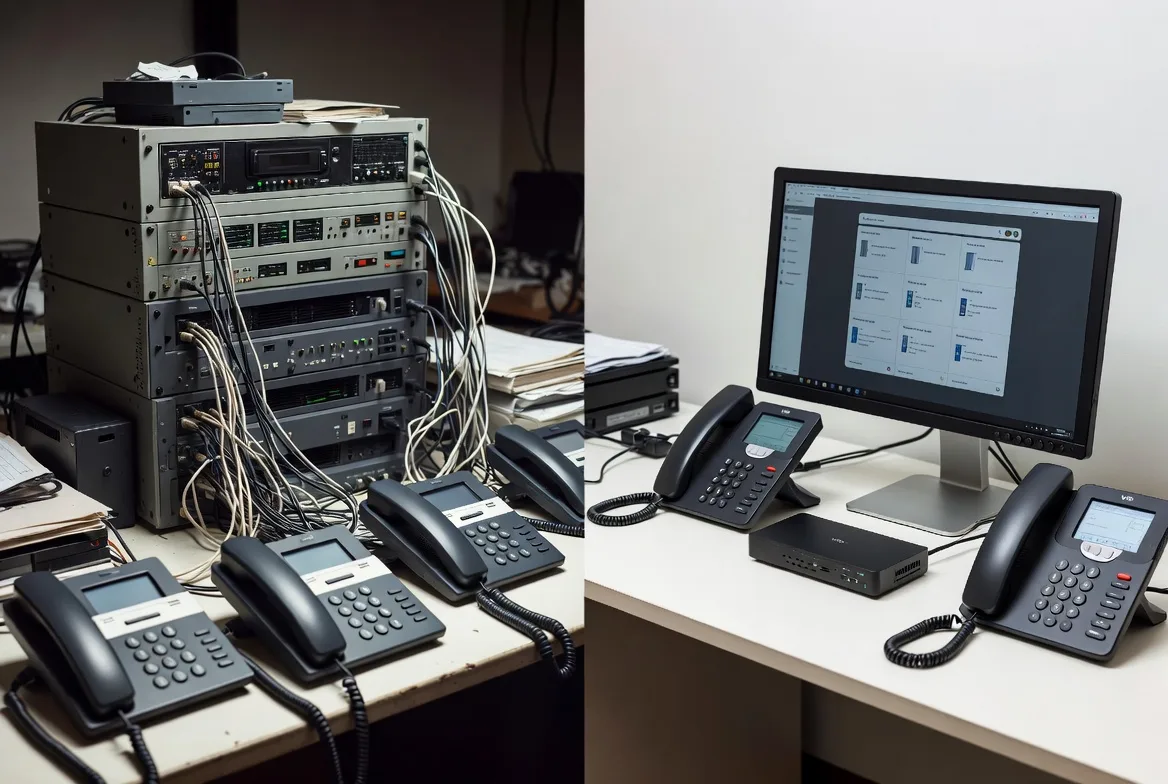
This shift eliminates the need for separate voice and data networks. A single fiber internet connection can handle your web traffic, email, cloud applications, and phone calls. When you need more call capacity, you simply purchase additional channels from your provider—no truck rolls, no installation delays, just a configuration change that takes minutes instead of weeks.
Key Benefits of SIP Trunking for Businesses
Cost reduction typically drives initial interest in SIP trunking. Businesses commonly see 30-50% savings on monthly telecommunications expenses after switching from traditional phone lines. These savings come from multiple sources: eliminating PRI circuit fees, reducing long-distance charges (especially international calls), and removing the need for separate voice and data connections.
Scalability becomes significantly easier with SIP trunk benefits extending to operational flexibility. Need to add five channels for a product launch next month? Your provider can activate them within hours. Seasonal businesses can scale capacity up during busy periods and down during slow months, paying only for what they need. This elasticity is impossible with traditional circuits that require long-term commitments and physical installations.
Geographic freedom represents another major advantage for distributed teams. With traditional phone systems, your phone numbers are tied to physical locations. SIP trunking for business allows you to maintain local numbers in multiple cities or countries while routing all calls through a single system. An employee in Austin can have a New York number that rings to their desk phone, mobile device, or softphone application without complex call forwarding.
Disaster recovery capabilities improve dramatically. Physical phone lines fail when buildings lose power or suffer damage. SIP trunks can automatically reroute to backup locations or mobile devices when your primary connection goes down. During Hurricane Elena in 2025, businesses using SIP trunking maintained phone service by redirecting calls to home offices and mobile devices while their physical offices remained inaccessible for three weeks.
Business continuity planning becomes simpler because your phone system isn’t tied to a physical location. If your office becomes unusable, employees can connect from anywhere with internet access. The same phone numbers continue working, customers experience no disruption, and business continues with minimal interruption.
SIP trunking adoption has reached a tipping point. We’re seeing 68% of mid-market companies either using or actively evaluating SIP trunks, up from 41% two years ago. The cost advantages are compelling, but the operational flexibility has become equally important as remote and hybrid work models become permanent.
Marcus Chen
SIP Trunking vs Traditional VoIP Services
The terms “SIP trunking” and “VoIP” are often used interchangeably, but they describe different approaches to internet-based telephony. Understanding the distinction helps you evaluate which solution fits your situation.
| Feature | SIP Trunking | Hosted VoIP | Traditional PSTN |
|---|---|---|---|
| Cost structure | Per-channel monthly fee plus usage | Per-user monthly subscription | Per-line monthly fee plus high per-minute charges |
| Scalability | Add channels instantly | Add users instantly | Requires new circuit installation (weeks) |
| Hardware needs | Existing IP-PBX or new SBC | Minimal (desk phones only) | Extensive on-premise PBX equipment |
| Setup complexity | Moderate (requires technical configuration) | Low (provider manages system) | High (professional installation required) |
| Geographic flexibility | Excellent (numbers from any location) | Excellent (numbers from any location) | Limited (numbers tied to physical location) |
| Disaster recovery | Strong (easy call rerouting) | Strong (cloud-based redundancy) | Weak (dependent on physical infrastructure) |
SIP trunking connects your existing phone system to the internet. You maintain control over your PBX (whether physical or virtual), manage your dial plans, handle call routing, and own the infrastructure. The SIP trunk provider simply delivers the connection to the outside world—they’re your gateway to the PSTN.
Hosted VoIP, by contrast, means your provider manages the entire phone system. Your desk phones connect to their cloud-based platform, they handle all call routing and features, and you access functionality through web portals or apps. You’re essentially renting phone service as a complete package.
The choice between these approaches depends on your existing infrastructure and control preferences. Companies with recent investments in IP-PBX systems often prefer SIP trunking because they can leverage existing equipment while modernizing connectivity. Businesses starting fresh or those wanting to eliminate on-premise hardware typically choose hosted VoIP for its simplicity.
Consider a law firm with 40 employees and a three-year-old IP-PBX system worth $35,000. SIP trunking lets them keep that investment while reducing monthly costs from $1,800 for PRI lines to $600 for SIP channels. A startup with 15 employees and no existing phone system would likely choose hosted VoIP at $25-35 per user monthly, avoiding capital expenditure entirely.
How to Set Up SIP Trunking for Your Business
Implementing SIP trunk setup requires careful planning around technical requirements, existing infrastructure, and business needs. Rushing into deployment without proper preparation leads to call quality issues, security vulnerabilities, and frustrated users.
Technical Requirements and Infrastructure Needs
Your internet connection forms the foundation of SIP trunking reliability. Voice traffic is sensitive to latency, jitter, and packet loss in ways that web browsing and email are not. A connection that works fine for general business use may prove inadequate for voice.
Bandwidth requirements follow a simple calculation: each concurrent call consumes approximately 100 Kbps (kilobits per second) of bandwidth in both directions when using the G.711 codec, or about 30-50 Kbps with compressed codecs like G.729. A business needing 20 simultaneous calls requires at least 2 Mbps dedicated to voice traffic, plus overhead for signaling. Most businesses should provision 25-30% more bandwidth than the theoretical minimum to account for network overhead and usage spikes.
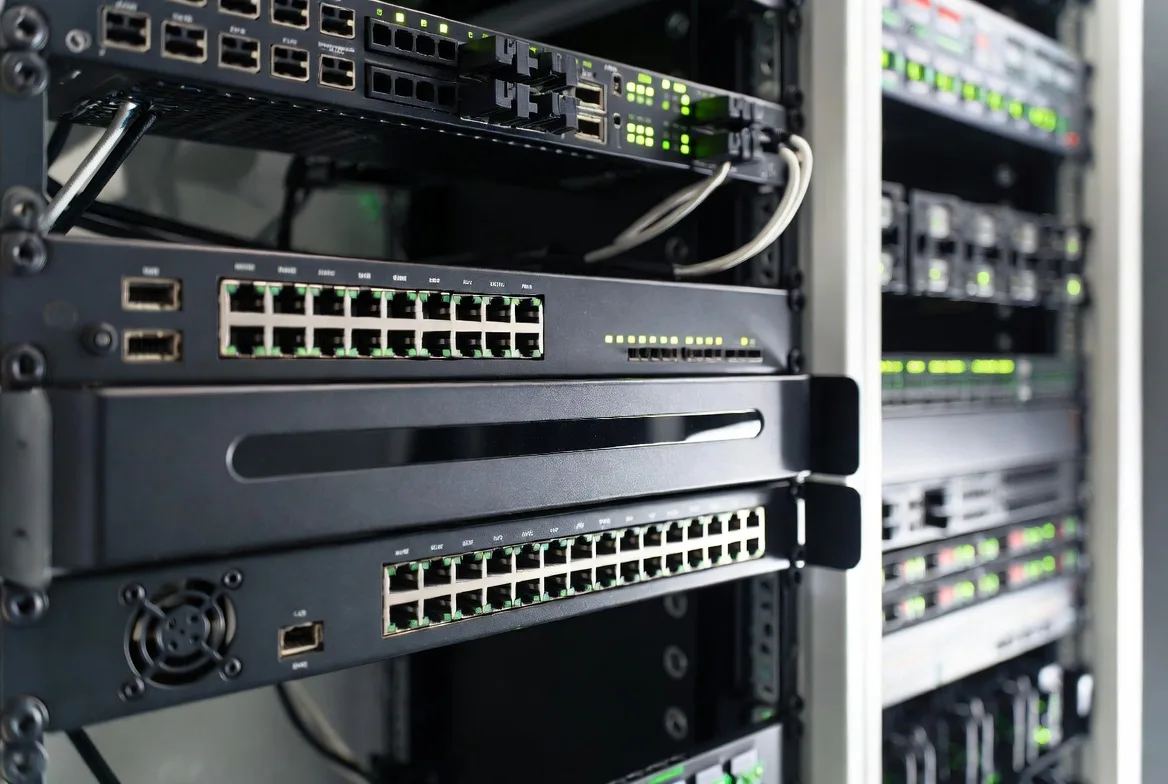
Quality of Service (QoS) configuration becomes essential when voice and data share the same connection. QoS settings prioritize voice packets over less time-sensitive traffic like file downloads or software updates. Without proper QoS, a large file upload can introduce latency that causes choppy audio or dropped calls. Your router or firewall must support QoS tagging and traffic shaping—consumer-grade equipment often lacks these capabilities.
Network security requires specific attention for SIP traffic. Your firewall must allow SIP signaling (typically UDP port 5060 or TCP port 5061 for encrypted SIP) and RTP media streams (usually UDP ports 10000-20000, though ranges vary by system). Many businesses implement a Session Border Controller (SBC) at the network edge to manage SIP traffic, provide security, and handle NAT traversal issues.
Existing phone equipment compatibility varies. IP phones designed for SIP will generally work with minimal configuration. Older digital or analog phones require an analog telephone adapter (ATA) or media gateway to connect. If you have a traditional PBX, you’ll need a gateway device that converts between your PBX’s protocol and SIP.
Choosing Between Hosted and On-Premise Solutions
The hosted versus on-premise decision affects costs, control, and maintenance responsibilities. On-premise solutions mean running your own IP-PBX (software-based systems like Asterisk, FreeSWITCH, or commercial options like Cisco UCM) on hardware you own or virtual machines you manage. You configure everything, control all settings, and handle maintenance and updates.
On-premise advantages include complete control over features and call routing, no per-user licensing for the PBX itself (though you still pay per-channel for SIP trunks), and the ability to customize extensively. A manufacturing company with complex intercom systems, paging zones, and integration with industrial equipment often needs this level of control.
The trade-off is responsibility. You need IT staff with telephony expertise or a consultant relationship for ongoing support. Hardware failures become your problem. Security patching and software updates fall on your team. For companies with 100+ employees and dedicated IT departments, these responsibilities are manageable. Smaller businesses often find them burdensome.
Hosted IP-PBX solutions (sometimes called cloud PBX or UCaaS) move the phone system infrastructure to your provider’s data center. You still use SIP trunks for external calling, but the PBX functionality runs in the cloud. This middle ground offers more control than fully hosted VoIP while eliminating on-premise hardware management.
A medical practice with three locations might choose a hosted IP-PBX with SIP trunking to centralize management while maintaining local numbers in each city. They get unified voicemail, extension dialing between offices, and centralized call reporting without managing servers.
SIP Trunk Pricing and Cost Factors
Understanding SIP trunking costs requires looking beyond the advertised per-channel rate. Total cost of ownership includes setup fees, monthly recurring charges, usage fees, and infrastructure investments.
Setup costs vary widely by provider. Some charge $50-200 per trunk for initial configuration and number porting. Others waive setup fees with annual contracts. Port-in fees for transferring existing phone numbers typically run $5-15 per number. If you need new local or toll-free numbers, expect $1-5 monthly per number regardless of whether you use channels.
Per-channel pricing forms the core monthly expense. A channel represents one simultaneous call path. Businesses typically need one channel per 3-4 employees for normal office use, or one per 2-3 employees for call-intensive environments like customer service centers. Rates in 2026 range from $15-35 per channel monthly depending on provider, contract length, and included features.
Metered versus unlimited plans affect total costs based on usage patterns. Metered plans charge per-minute fees (typically $0.01-0.03 for domestic calls, $0.05-0.25 for international) after included minutes. Unlimited domestic plans cost $20-30 per channel with no per-minute charges for calls within the US and Canada. International calling usually incurs additional per-minute fees even on unlimited plans.
Calculate your break-even point by reviewing current usage. A business making 10,000 domestic minutes monthly across 10 channels would pay approximately $20 per channel ($200 total) on an unlimited plan or $15 per channel plus $200 in usage fees ($350 total) on a metered plan with $0.02 per-minute overage. The unlimited plan saves $150 monthly in this scenario.
Hidden costs catch unprepared buyers. Some providers charge for features that others include: E911 service fees ($1-3 per location monthly), CNAM (caller ID name) lookups, fax support, or call recording. Regulatory fees and taxes add 10-25% to base pricing depending on jurisdiction. Early termination fees can reach thousands of dollars if you leave before contract expiration.
Contract terms typically offer better pricing for longer commitments. Month-to-month service might cost $35 per channel while a three-year contract drops that to $20. Balance the savings against flexibility—telecommunications needs change, and being locked into capacity you don’t need wastes money. Many businesses start with shorter terms to validate the solution before committing long-term.
Equipment costs depend on your starting point. Businesses with compatible IP-PBX systems may only need minor configuration changes. Those starting fresh face expenses for IP phones ($80-300 each), an IP-PBX server or appliance ($1,500-15,000), and potentially a session border controller ($2,000-10,000). Cloud-based IP-PBX options reduce upfront costs but add $15-25 per user monthly.
How to Choose a SIP Trunk Provider
Provider selection significantly impacts reliability, call quality, and long-term satisfaction. The cheapest option often proves expensive when poor support or frequent outages disrupt business operations.
Network reliability and uptime guarantees should be your first consideration. Look for providers offering 99.99% uptime SLAs (service level agreements) backed by credits or refunds when they fail to meet commitments. Ask about network redundancy—do they have multiple data centers, diverse carrier connections, and automatic failover capabilities? A provider with a single point of failure puts your business communications at risk.

Call quality depends on network infrastructure and carrier relationships. Providers with direct connections to major carriers typically deliver better call quality than those using multiple intermediaries. Ask about their network architecture, whether they own infrastructure or resell, and what codecs they support. Tier 1 carriers like Lumen, Bandwidth, and Telnyx operate their own networks, while many smaller providers resell capacity.
Geographic coverage matters for businesses with multiple locations or international calling needs. Verify that your provider can deliver local numbers in all cities where you operate. International calling rates and quality vary dramatically—a provider with strong US coverage may have poor rates or quality for calls to Europe or Asia. Request rate sheets for countries you frequently call.
Support quality becomes critical when problems occur. A provider with 24/7 phone support and typical response times under 15 minutes gives you recourse when calls aren’t working. Email-only support or offshore call centers with limited technical expertise lead to prolonged outages. During evaluation, call their support line at different times to assess responsiveness and technical knowledge.
Compliance and certifications matter in regulated industries. Healthcare organizations need providers who understand HIPAA requirements and offer appropriate business associate agreements. Financial services may require specific security certifications. E911 compliance is mandatory—verify that your provider supports accurate emergency location identification for all your locations.
Integration capabilities affect how well SIP trunking works with your existing systems. If you use a specific IP-PBX platform, confirm that your provider has experience with it and offers configuration guides or support. CRM integration, call analytics platforms, and contact center software may require specific features or APIs from your SIP trunk provider.
Contract flexibility and terms require careful review. Watch for automatic renewal clauses, minimum purchase requirements that exceed your needs, and penalties for reducing channel counts. Some providers lock you into specific capacity levels for the contract term, while others allow monthly adjustments. Understand the process and costs for adding or removing channels as your needs change.
Porting policies and number ownership deserve attention. Some providers claim ownership of numbers they provide, making it difficult to leave. Ensure that any numbers you port in remain yours and that you can port them out if you change providers. Ask about the porting timeline—most transfers take 7-15 business days, but some providers drag the process out to retain customers.
FAQs
SIP trunking works well for small businesses with at least 5-10 employees who need professional phone system features. The cost savings become meaningful at this scale—a 10-person office might reduce monthly phone costs from $400-500 to $150-200. However, very small businesses (under 5 people) often find hosted VoIP simpler and more cost-effective because they avoid managing infrastructure. The decision point typically involves existing equipment: if you already have an IP-PBX worth keeping, SIP trunking makes sense. Starting from scratch, hosted VoIP usually offers better value for small teams.
Yes, you can port existing phone numbers to your SIP trunk provider through a process called Local Number Portability (LNP). The process requires submitting a Letter of Authorization and your most recent phone bill to verify ownership. Porting typically takes 7-15 business days for local numbers and 10-20 days for toll-free numbers. During the port, maintain service with your existing provider—canceling early can cause the port to fail and result in losing your numbers. Most SIP trunk providers handle the porting process and coordinate the cutover to minimize disruption. Port-in fees typically range from $5-15 per number.
When your internet connection fails, inbound calls can automatically forward to backup numbers (mobile phones, alternate locations) if you configure failover rules with your provider. Outbound calling stops until connectivity restores unless you have a secondary internet connection or backup PSTN lines. Many businesses implement redundant internet connections from different providers using different physical paths to maintain service during outages. Advanced setups use automatic failover that switches to the backup connection within seconds. For critical operations, consider keeping a few traditional phone lines or cellular backup devices that activate when primary internet fails. Your IP-PBX or SBC typically monitors connection status and triggers failover automatically, though configuration varies by system.
SIP trunking represents a practical evolution in business communications, replacing outdated circuit-based telephony with flexible, cost-effective internet connectivity. The technology delivers measurable benefits—lower costs, easier scaling, geographic flexibility, and improved disaster recovery—that directly impact your bottom line and operational capabilities.
Success with SIP trunking requires matching the solution to your specific situation. Businesses with existing IP-PBX investments gain immediate value by replacing expensive PRI circuits with SIP channels. Companies starting fresh should carefully weigh SIP trunking against hosted VoIP based on control requirements, technical capabilities, and total cost of ownership.
The technical requirements aren’t trivial: adequate bandwidth, proper QoS configuration, compatible equipment, and knowledgeable support. Cutting corners on internet quality or network configuration leads to poor call quality and user frustration that undermines the entire investment. Treat voice infrastructure with the same seriousness you apply to other critical business systems.
Provider selection matters as much as the technology itself. Reliability, support quality, and transparent pricing separate providers who become valuable partners from those who create ongoing headaches. Take time to evaluate options, test call quality, and verify that support meets your expectations before committing to long-term contracts.
For most businesses, the question isn’t whether to adopt SIP trunking but when and how. Traditional phone lines are declining infrastructure with increasing costs and decreasing support. Moving to IP-based communications is inevitable—doing it thoughtfully, with proper planning and realistic expectations, ensures you capture the benefits while avoiding common pitfalls.